
A bargain composite door often costs more long term. Learn why cheap composite doors fail early and what homeowners only discover too late.
What You’ll Learn:
- How internal construction causes warping, bowing, and early breakdown.
- Why weak panels and frames undermine even good locks.
- Why colour fade, glazing failure, and corrosion happen so quickly.
- How repeat replacements and repairs erase any upfront savings.
(Estimated Reading Time: 10-11 Minutes)
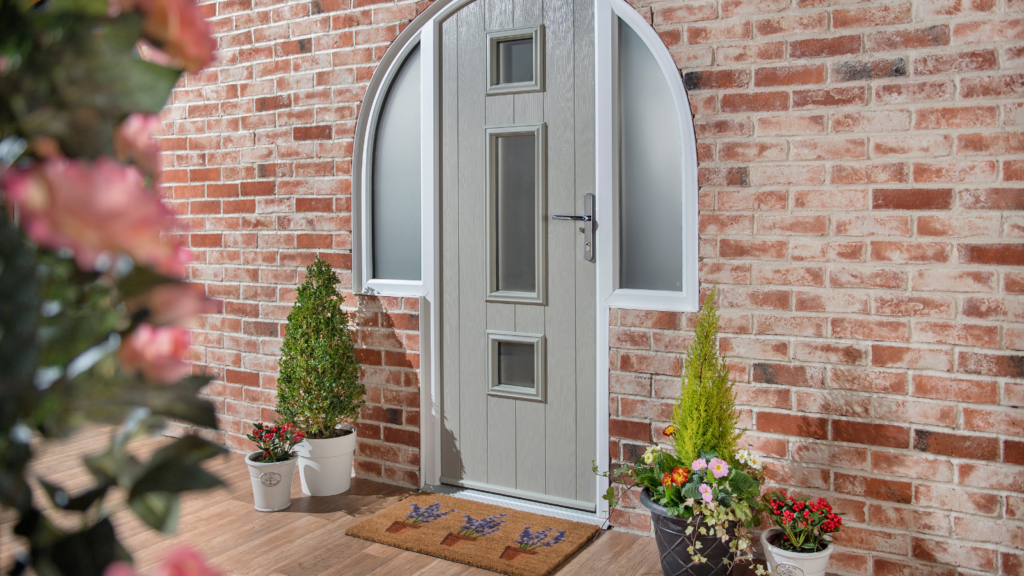
Intro: A bargain composite door is rarely a saving
Everyone likes a good deal — but when it comes to a composite door, a bargain price often hides serious compromises. The real cost doesn’t show on installation day. It appears months or years later, when doors warp, fade, bow, or fail to secure properly.
Since 2008, we’ve replaced hundreds of failed composite doors sold as “bargains.” Different brands, same outcome. Lightweight construction, weak hardware, rushed fitting — all leading to early failure.
This guide explains why bargain composite doors fail, what problems homeowners don’t see at first, and why cheaper doors almost always cost more in the long run.
1. The foam core is the biggest flaw — and the root of every failure
Most cheap composite doors are made with:
- A thin GRP skin
- A large block of polyurethane foam
- Basic internal stiffeners (if any)
- A lightweight frame
It looks like a door.
It acts like a door.
Until the first winter… then the problems start.
The foam core weaknesses:
- It warps under heat.
- It shrinks in winter.
- It flexes under impact.
- It fails at hardware fixing points.
Your door literally moves, bends, twists, and fights against its frame.
Eventually hinges won’t align. Locks won’t engage. Gaps appear. Draughts follow.
The lifespan of a cheap composite door?
5 to 8 years.
That’s it.
Compare that to a 20–25 year Solidor — you’re buying three cheap doors to do the job of one.
2. The security risk nobody talks about
Cheap composite doors look solid.
They’re not.
We’ve replaced hundreds of budget doors after break-ins and attempted break-ins.
And here’s the staggering fact:
Most weren’t attacked through the lock — they were attacked through the panel.
A sharp knife can slice through a thin GRP skin.
A shoulder can crack a foam panel.
A crowbar can tear it away from a cheap frame.
Real-world examples we’ve seen:
- Panels pushed through like cardboard.
- Frames snapping around screw points.
- Hinges pulling out because the internal core couldn’t hold fixings.
- Locks working perfectly — but the door around them failing completely.
Security is only as good as the structure behind it.
And foam isn’t structure.
It’s packing material pretending to be a door.
3. The colour fades — fast
Cheap composite doors use basic GRP gel coats or low-cost laminates.
They look great the day they’re fitted.
Then UV hits them.
Signs of cheap-door fade:
- Chalky white patches
- Patchy colour loss
- Flaking around edges
- Yellowing in white or cream tones
- Bleaching in darker colours
Solidor uses a thermo-plastic, UV-stable skin — not paint.
It stays consistent for decades.
Cheap doors simply can’t compete with that.
4. The door bows — and then everything breaks
When a door bows even a few millimetres:
- The latch stops lining up.
- The lock won’t engage smoothly.
- The top or bottom scrapes.
- The seal stops sealing.
- The door becomes draughty.
Cheap composite doors bow because:
- Foam expands unevenly.
- GRP skins react to heat.
- The frame flexes under pressure.
- Poor installation amplifies movement.
Once the bowing starts, it’s game over — you don’t fix bowing; you replace the door.
5. The hinges can’t handle the stress
Foam-core doors rely on the GRP skin for hinge rigidity.
That’s like bolting a hinge to a cereal box.
Over time:
- Screws start pulling out
- Hinges shift position
- Compression can’t be maintained
- Sagging begins
- Locks misalign
This is one of the top reasons homeowners call us to replace budget doors.
Solidor hinges fix into solid, engineered timber — stable, dense, immovable.
6. The glazing fails and fogs inside the cassette
Cheap doors use:
- Basic glazing units
- Weak cassette seals
- Thin gaskets
- Poor-quality locking clips
As soon as the door flexes (and it will), the glazing cassette loosens. That causes:
- Water ingress
- Internal condensation
- Fogged glass
- Staining
- Mould
Once moisture gets in, it spreads.
Most low-end door warranties don’t cover this because it’s classed as “installation error” — even when it’s actually product design failure.
7. The hardware corrodes far too quickly
You can spot a cheap composite door from the pavement by its handles and hinges.
They pit, tarnish, discolour, and corrode rapidly because they’re usually:
- Powder-coated rather than plated
- Low-grade zinc
- Untreated steel
- Cheap cast components
Hardware life on cheap doors?
3–5 years if you’re lucky.
After that, everything looks tired.
Solidor fittings are marine-grade, corrosion-tested, and designed for 15–20 years.
8. The warranty means nothing (read the fine print)
Cheap composite door warranties are masterclasses in creative loopholes.
Common exclusions include:
- Bowing
- Colour fade
- Panel cracking
- Glazing issues
- Water ingress
- Hardware corrosion
- Frame warping
- Alignment problems
In other words:
Everything that actually goes wrong.
Solidor (and Timber Composite Doors) offer:
- 10-year product guarantee
- 10-year installation guarantee
- Real aftercare
- Real people you can call
- Real parts backed by real manufacturers
- Zero nonsense
9. The install is usually rushed — which makes everything worse
Cheap door companies rely on volume, not quality.
Installers are:
- Paid per job
- Working fast
- Cutting corners to hit quantity
- Often outsourced or subcontracted
- Rarely trained by manufacturers
We’ve lost count of how many budget doors we’ve removed that were incorrectly installed on day one:
- Frames out of square
- Cheap foam-packed gaps
- Incorrect fixings
- Sealant slapped on to hide alignment issues
Buy cheap, buy twice — because a poor installation can kill even a decent door.
With Solidor + our installation, everything is surveyed, measured, fitted, levelled, checked, and guaranteed properly.
10. The long-term cost is far higher than the purchase price
A cheap composite door costs £900–£1,200 fitted.
A Solidor costs £1,490–£1,750 fitted.
But let’s look at total cost over 20 years:
Cheap Composite Door
- Initial cost: £900
- Replace after 7 years: £900
- Replace again after 7 years: £900
- Hardware replacements: £200
- Draught-proofing / alignment visits: £150
Total: £3,050
Solidor Door
- Initial cost: £1,790
- Zero replacements
- Zero repainting
- Zero major maintenance
Total: £1,790
Cheap doors don’t save money.
They redistribute the pain over time.
Conclusion: Cheap composite doors fail because they’re built to be cheap — not to last
If you take one message away from this comparison, it’s this:
A composite door is only as strong as its core — and foam isn’t a core.
Cheap composite doors:
- Warp
- Bow
- Fade
- Flex
- Crack
- Draught
- Fail early
Solidor:
- Lasts 20–25 years
- Stays rigid
- Stays secure
- Stays true
- Stays beautiful
- Stays reliable
One is disposable.
The other is engineered.
If you want a front door that feels premium, performs flawlessly, and lasts for decades, you already know which direction to go.
🛒 Browse online: www.timbercompositedoors.com
📞 Or Call us: 01642 309576 for expert advice
In a rush? Why not contact us via Whatsapp
Browse Our Articles
- Solidor Prices: What You Need to Know Before Choosing Your Perfect Door
- Solidor Design a Door
- Composite Doors with Dog Flaps: The Perfect Solution for Your Furry Friend
- Trade Solidor Composite Doors: looking for trade prices? Visit our trade site, The Trade Village
FAQ’s
Why do bargain composite doors fail so quickly?
Bargain composite doors rely on foam cores, thin skins, and low-grade hardware. These materials move, flex, and degrade, leading to failure within 5–8 years.
Are all composite doors the same inside?
No. A composite door’s performance depends on its core. Foam-filled doors behave very differently from solid or timber-cored doors in strength, security, and lifespan.
Is colour fade common on cheap composite doors?
Yes. Budget composite doors often use basic coatings or laminates that break down under UV exposure, causing patchy fading and chalking within a few years.
Can installation fix a poor-quality composite door?
No. A good installer can’t compensate for weak materials. Poor structure will eventually warp, bow, or fail regardless of fitting quality.
